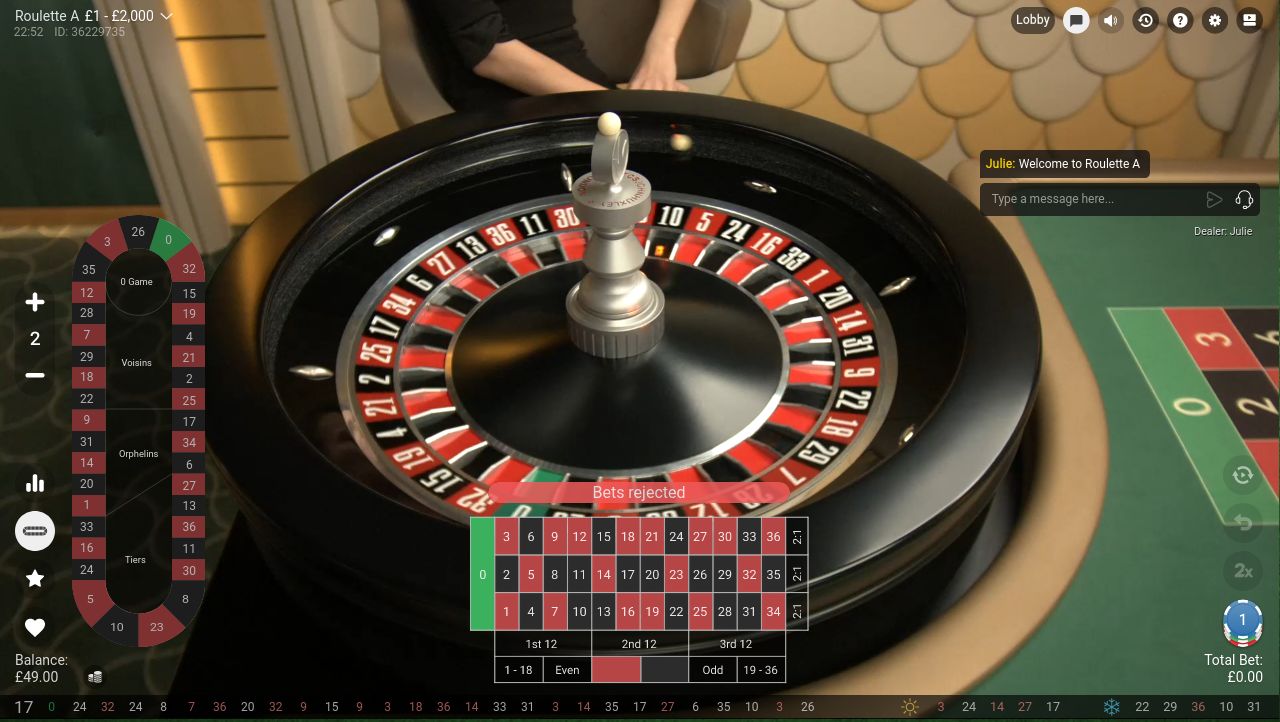
ruletka na prawdziwe pieniadze online: wybór stołu i zarządzanie budżetem w 2026
ruletka na prawdziwe pieniadze online jest idealna dla osób lubiących połączenie analizy i rozrywki. Zanim zdecydujesz się na konkretny system, przetestuj go w trybie demo, aby zrozumieć jego działanie. W dalszej części artykułu wyjaśniamy, jak ruletka na prawdziwe pieniadze online stoły może ułatwić Ci wybór odpowiedniej strategii.
Zobacz też:
- Kluczowe aspekty gry: ruletka na prawdziwe pieniadze online strategia w pigułce
- Czym jest ruletka na prawdziwe pieniadze online strategia i jak działa?
- Jak grać w ruletkę: przewodnik z ruletka na prawdziwe pieniadze online stoły
- Błędy, których unikać przy ruletka na prawdziwe pieniadze online stoły
- Bonusy kasynowe przy ruletce – co warto wiedzieć
- ruletka na prawdziwe pieniadze online strategia – najważniejsze informacje
- Odpowiedzialna gra w ruletkę – zasady bezpieczeństwa
Kluczowe aspekty gry: ruletka na prawdziwe pieniadze online strategia w pigułce
en prison, dans l’ombre humide des murs de pierre, là où le temps se distord et s’étire comme une mélodie lente, chaque seconde devient une éternité pesante. Les barreaux de fer, rouillés par l’humidité et les larmes, dessinent des motifs géométriques sur le sol de terre battue, où les pas des prisonniers ont creusé des sillons profonds, témoins silencieux de leurs allées et venues monotones. L’air est chargé d’une odeur âcre de moisi, de sueur, de peur et de désespoir, un mélange qui imprègne les vêtements, la peau, et jusqu’à l’âme de ceux qui sont enfermés ici. La lumière, filtrée par une lucarne étroite et sale, tombe en un rai pâle qui éclaire les particules de poussière en suspension, dansant comme des spectres dans une valse funèbre. Chaque matin, le cliquetis des clés dans la serrure annonce le début d’une journée identique à la précédente, rythmée par les repas frugaux, les promenades dans la cour exiguë, et les heures interminables passées à contempler les murs, à compter les fissures, à imaginer un dehors qui semble n’avoir jamais existé. Les murmures des autres détenus, chuchotés à travers les murs, tissent une toile de récits brisés, de regrets, de confessions et de rêves avortés, créant une communauté souterraine de solitudes partagées. Le temps, ici, n’est plus mesuré par les horloges mais par les saisons qui passent à travers les barreaux, par les feuilles qui tombent dans la cour, par la neige qui s’accumule sur le rebord de la fenêtre, par la chaleur étouffante de l’été qui rend l’air irrespirable. Les gardiens, figures fantomatiques vêtues d’uniformes sombres, déambulent dans les couloirs avec une indifférence étudiée, leurs bottes résonnant sur les dalles comme un métronome implacable qui scande les heures d’ennui. Dans les cellules, les détenus développent des rituels obsessionnels : certains comptent les jours en gravant des encoches sur le bois de leur lit, d’autres récitent des prières ou des poèmes appris par cœur, d’autres encore s’adonnent à des jeux solitaires avec des morceaux de pain ou des cailloux trouvés dans la cour. Les nuits sont les plus dures : l’obscurité totale, le silence troublé par les gémissements des rêves, les cris étouffés de ceux qui revivent leurs crimes ou leurs traumatismes, et le froid qui s’insinue sous les couvertures râpées. L’espoir, cette denrée rare, est cultivé comme une plante fragile dans les interstices de l’âme, alimenté par les lettres qui arrivent parfois, par les visites rares dans un parloir vitré, par la perspective lointaine d’une libération qui semble toujours reculer. Mais il y a aussi la résignation, cette acceptation amère de la fatalité, qui transforme les hommes en ombres d’eux-mêmes, qui éteint la flamme de la rébellion, qui les fait plier sous le poids de la culpabilité et de la punition. La prison, ce microcosme, reflète la société dans sa version la plus crue, avec ses hiérarchies informelles, ses alliances, ses trahisons, ses codes d’honneur, et sa violence latente qui peut éclater à tout moment, pour un regard de travers, une dette de jeu, une insulte. Les repas, servis dans des gamelles métalliques, sont une soupe claire, du pain rassis, parfois un morceau de viande filandreuse, avalés sans goût, dans le bruit des cuillères contre le métal, dans une promiscuité qui efface toute notion de dignité. Les ateliers de travail, où l’on coud des uniformes ou assemble des pièces, offrent une échappatoire temporaire, mais le salaire dérisoire ne sert qu’à acheter du tabac ou des douceurs au cantinier, un trafic officieux qui rythme la vie carcérale. Les évasions, rares et souvent tragiques, sont des légendes qui se transmettent de génération en génération de prisonniers, des récits de tunnels creusés avec des cuillères, de cordes tressées avec des draps, de complicités extérieures, mais la plupart échouent, et les fugitifs sont repris, jugés, condamnés à des peines plus lourdes, ou placés à l’isolement, dans des cachots où la lumière ne pénètre jamais. La santé mentale est un champ de bataille : certains sombrent dans la folie, parlant seuls, riant sans raison, perdant la notion du temps, tandis que d’autres développent une résistance farouche, une carapace de cynisme et d’humour noir qui les aide à survivre. Les relations entre détenus sont complexes : il y a les anciens, respectés pour leur expérience, qui enseignent aux nouveaux les règles non écrites, les protections à solliciter, les dangers à éviter ; il y a les faibles, victimes désignées des prédateurs, qui vivent dans la terreur constante ; il y a les leaders, charismatiques, qui organisent la vie collective, négocient avec l’administration, distribuent les faveurs. La prison est aussi un lieu de réflexion, où certains trouvent la foi, lisent la Bible, écrivent des mémoires, découvrent la philosophie, se repentent de leurs péchés, tandis que d’autres se radicalisent, nourrissant leur haine, planifiant leur vengeance. Les familles, de l’autre côté des murs, subissent une peine parallèle, marquées par la honte, la séparation, les difficultés financières, les trajets longs pour une visite de vingt minutes, les appels téléphoniques surveillés, les colis fouillés.
Czym jest ruletka na prawdziwe pieniadze online strategia i jak działa?
Dlaczego ruletka pozostaje królową kasyn
Ruletka od wieków uchodzi za najbardziej rozpoznawalną grę stołową w kasynach na całym świecie, a w Polsce jej popularność nie słabnie. Urok wirującego koła, toczącej się kulki i napięcie towarzyszące każdemu zakładowi sprawiają, że zarówno nowicjusze, jak i doświadczeni gracze chętnie zasiadają przy zielonym stole. W tym szczegółowym przewodniku przyjrzymy się czterem głównym odmianom ruletki – europejskiej, amerykańskiej, francuskiej oraz ruletce na żywo – wyjaśnimy mechanikę zakładów, porównamy wartości house edge i RTP, a także przedstawimy sprawdzone strategie dla początkujących. Niezależnie od tego, czy grasz w kasynie stacjonarnym, czy online, zrozumienie tych różnic pozwoli Ci podejmować świadome decyzje i zwiększyć szanse na satysfakcjonującą rozgrywkę.
Ruletka europejska i amerykańska – kluczowe różnice
Najważniejszym podziałem w świecie ruletki jest ten między wersją europejską a amerykańską. Ruletka europejska wykorzystuje koło z 37 polami – numery od 1 do 36 oraz jedno zero (0). To właśnie pojedyncze zero sprawia, że przewaga kasyna (house edge) wynosi zaledwie 2,70%, co czyni tę odmianę jedną z najbardziej przyjaznych graczom. Z kolei ruletka amerykańska posiada dodatkowe pole podwójnego zera (00), co zwiększa łączną liczbę pól do 38. Obecność dwóch zer podnosi przewagę kasyna do 5,26%, czyli niemal dwukrotnie w porównaniu z wersją europejską. Dla gracza oznacza to prostą zasadę: jeśli masz wybór, zawsze wybieraj ruletkę europejską, gdyż statystycznie daje Ci większe szanse na wygraną. Co więcej, różnica w RTP (zwrot dla gracza) jest znacząca – europejska oferuje RTP na poziomie 97,30%, podczas gdy amerykańska spada do 94,74%. Ta pozornie niewielka różnica procentowa przekłada się na realne straty w długoterminowej perspektywie.
Ruletka francuska – wyjątkowe zasady i niższa przewaga kasyna
Ruletka francuska, choć na pierwszy rzut oka podobna do europejskiej, kryje w sobie kilka unikalnych zasad, które mogą znacząco wpłynąć na wynik gry. Koło składa się z 37 pól, a więc ma tylko jedno zero, co już samo w sobie zapewnia house edge na poziomie 2,70%. Jednak prawdziwa przewaga tej odmiany leży w dwóch dodatkowych regułach: La Partage oraz En Prison. Zasada La Partage działa w przypadku zakładów na równe szanse (np. czerwone/czarne, parzyste/nieparzyste, niskie/wysokie). Jeśli padnie zero, gracz odzyskuje połowę postawionej kwoty, zamiast tracić całą stawkę. Z kolei reguła En Prison pozwala graczowi pozostawić zakład na stole na kolejne okrążenie, a jeśli wtedy padnie liczba wygrywająca, gracz odzyskuje pełną stawkę. Dzięki tym regułom przewaga kasyna w ruletce francuskiej spada do zaledwie 1,35% dla zakładów na równe szanse, co czyni ją najbardziej opłacalną wersją ruletki dostępną w kasynach. Warto pamiętać, że nie wszystkie kasyna online oferują te zasady w czystej formie, dlatego przed rozpoczęciem gry zawsze sprawdzaj regulamin danej gry.
ruletka na prawdziwe pieniadze online 2026 — najlepsze strategie
Rodzaje zakładów w ruletce – od prostych do złożonych
Ruletka oferuje szeroki wachlarz zakładów, które można podzielić na dwie główne kategorie: zakłady wewnętrzne (na numery) oraz zewnętrzne (na grupy liczb). Zakłady wewnętrzne obejmują typowanie pojedynczego numeru (straight), dwóch sąsiednich numerów (split), trzech numerów w rzędzie (street), czterech numerów tworzących narożnik (corner) czy sześciu numerów w dwóch rzędach (six line). Charakteryzują się one wyższymi wypłatami, ale jednocześnie mniejszym prawdopodobieństwem trafienia. Na przykład zakład na pojedynczy numer w ruletce europejskiej wypłaca 35:1, ale szansa na wygraną wynosi zaledwie 2,70%. Z drugiej strony zakłady zewnętrzne, takie jak czerwone/czarne, parzyste/nieparzyste, niskie (1-18) lub wysokie (19-36), oferują wypłatę 1:1 i dają niemal 50% szans na sukces (z uwzględnieniem zera). Dla początkujących graczy zalecane jest rozpoczynanie od zakładów zewnętrznych, ponieważ pozwalają one na dłuższą grę przy mniejszym ryzyku, a jednocześnie umożliwiają stopniowe poznawanie mechaniki stołu. Warto również wspomnieć o zakładach kolumnowych i tuzinach, które wypłacają 2:1, co stanowi kompromis między ryzykiem a potencjalnym zyskiem.
Ruletka na żywo i strategie dla początkujących
Ruletka na żywo to doskonała propozycja dla graczy, którzy pragną poczuć atmosferę prawdziwego kasyna bez wychodzenia z domu. W tej wersji gry krupier prowadzi sesję na żywo, transmitowaną w czasie rzeczywistym z profesjonalnego studia, a gracze mogą obstawiać zakłady za pomocą interfejsu online. Kluczową zaletą ruletki na żywo jest transparentność – widzisz dokładnie, co dzieje się przy stole, a interakcja z krupierem dodaje realizmu. Dla początkujących istotne jest, aby wybierać stoły z regułami europejskimi lub francuskimi, unikając wersji amerykańskiej ze względu na wyższą przewagę kasyna.
Jak grać w ruletkę: przewodnik z ruletka na prawdziwe pieniadze online stoły
ruletka na prawdziwe pieniadze online jest często wybierane przez graczy ze względu na szybkie wypłaty.
Błędy, których unikać przy ruletka na prawdziwe pieniadze online stoły
variants, in the context of genetics and evolutionary biology, refer to the different forms of a gene, known as alleles, or the distinct versions of a DNA sequence that arise through mutations. These mutations can be as small as a single nucleotide polymorphism (SNP), where one base pair is altered, or as large as structural variations such as deletions, duplications, inversions, or translocations of chromosomal segments. Each variant carries a unique genetic code that may influence an organism’s phenotype, ranging from subtle differences like eye color to profound effects such as susceptibility to diseases. The study of variants is fundamental to understanding genetic diversity within populations, tracing evolutionary relationships, and identifying the genetic basis of inherited disorders. In human genomics, variants are cataloged in databases like dbSNP and the 1000 Genomes Project, which provide comprehensive maps of common and rare variations across global populations. These resources enable researchers to perform genome-wide association studies (GWAS) to link specific variants with traits or diseases, thereby uncovering the genetic architecture of complex conditions like diabetes, cancer, and heart disease. Moreover, variants are not static; they arise spontaneously during DNA replication or are induced by environmental factors such as radiation, chemicals, or viruses. The frequency of a variant in a population is shaped by natural selection, genetic drift, gene flow, and mutation rates, which together drive evolutionary change. For instance, the sickle cell mutation in the HBB gene confers resistance to malaria in heterozygous individuals, illustrating how a deleterious variant can be maintained in a population due to heterozygote advantage. In clinical practice, identifying pathogenic variants is crucial for diagnostic testing, carrier screening, and personalized medicine, where treatments can be tailored based on an individual’s genetic profile. Pharmacogenomics, for example, uses variants in genes like CYP2C19 and VKORC1 to predict drug metabolism and dosing, thereby reducing adverse reactions and improving therapeutic efficacy. Furthermore, variants in non-coding regions, once considered ‚junk DNA’, are now recognized to play regulatory roles, affecting gene expression through enhancers, promoters, and long non-coding RNAs. Epigenetic modifications can also influence the phenotypic impact of variants, adding another layer of complexity to genotype-phenotype correlations. With the advent of CRISPR-Cas9 and other gene-editing technologies, researchers can precisely introduce or correct variants to study their functions or to develop gene therapies for monogenic disorders like cystic fibrosis and muscular dystrophy. However, the interpretation of variants remains challenging, as many are of uncertain significance, requiring functional assays, computational predictions, and large-scale population data to classify them as benign, likely benign, pathogenic, or likely pathogenic. The American College of Medical Genetics and Genomics (ACMG) has established guidelines for variant classification, which incorporate evidence from segregation studies, allele frequency, in silico tools, and experimental data. Additionally, the concept of ‚variant burden’ in a genome, which includes the total number of rare and common variants, can influence an individual’s overall fitness and predisposition to complex diseases. In evolutionary studies, variants serve as molecular clocks, allowing scientists to estimate divergence times between species and to reconstruct phylogenetic trees. Mitochondrial DNA variants, for instance, are maternally inherited and have been used to trace human migration patterns out of Africa. Y-chromosome variants similarly track paternal lineages. The coalescent theory provides a mathematical framework to model how variants in a population share ancestry, enabling inferences about population history, effective population size, and demographic events like bottlenecks and expansions. Moreover, variants in pathogens, such as the spike protein mutations in SARS-CoV-2, can alter transmissibility, virulence, and vaccine efficacy, underscoring the dynamic nature of viral evolution and the need for continuous genomic surveillance. In agriculture, plant and animal breeders exploit natural variants to enhance desirable traits like yield, drought tolerance, and disease resistance, using marker-assisted selection and genomic selection to accelerate breeding programs. The field of metagenomics also relies on variants to identify microbial species and functional capabilities in environmental samples, providing insights into ecosystem health and biogeochemical cycles. Furthermore, variants in the human leukocyte antigen (HLA) system are critical for immune recognition and transplantation compatibility, with thousands of alleles determining the success of organ transplants and the susceptibility to autoimmune diseases. The ethical, legal, and social implications (ELSI) of variant data are profound, including concerns about privacy, discrimination, and informed consent. Direct-to-consumer genetic testing companies like 23andMe and AncestryDNA offer variant reports for traits and health risks, raising questions about the interpretation and communication of results. As sequencing costs plummet, whole-genome sequencing is becoming routine in research and clinical settings, generating massive datasets that require sophisticated bioinformatics pipelines for variant calling, annotation, and prioritization. Tools like GATK, SAMtools, and VEP are standard in the field. Machine learning algorithms are increasingly employed to predict the functional impact of variants, integrating features such as evolutionary conservation, protein structure, and regulatory context. Despite these advances, many variants remain uncharacterized, and the gap between genotype and phenotype persists due to pleiotropy, epistasis, and gene-environment interactions. Therefore, the study of variants is a multidisciplinary endeavor that spans molecular biology, genetics, bioinformatics, clinical medicine, ecology, and evolution, with the ultimate goal of deciphering the blueprint of life and leveraging that knowledge to improve human health and understand the natural world. For example, the discovery of the BRCA1 and BRCA2 variants has revolutionized cancer risk assessment, enabling prophylactic surgeries and targeted therapies like PARP inhibitors. Similarly, the identification of the APOE4 variant has profound implications for Alzheimer’s disease risk, influencing both research and clinical counseling. In rare disease diagnostics, whole-exome sequencing has led to the identification of novel disease-causing variants in genes like SCN1A for Dravet syndrome, providing families with answers and potential therapeutic avenues. Moreover, population-scale projects like the UK Biobank and the All of Us Research Program are amassing variant data linked to electronic health records, enabling unprecedented studies on gene-environment interactions and predictive medicine. The integration of variant data with other omics layers, such as transcriptomics, proteomics, and metabolomics, is also advancing, offering a more holistic view of how genetic changes manifest at the molecular level. In conservation biology, variants are used to assess the genetic health of endangered species, guiding breeding programs to maintain diversity and adaptability.
www.loteriaswiateczna.pl zarejestruj kod — szybka wypłata | www.loteriaswiateczna.pl zarejestruj kod
Bonusy kasynowe przy ruletce – co warto wiedzieć
- zł2000 bonus powitalny
- zł250 + 100 spinów
- 30x obrót
- Wagering 30x w 14 dni
- Warunek 35x obrotu
ruletka na prawdziwe pieniadze online strategia – najważniejsze informacje
Jaka jest różnica między ruletką europejską a amerykańską?
Główna różnica polega na liczbie pól na kole. Ruletka europejska ma jedno zero (37 pól), co daje przewagę kasyna na poziomie 2,70%, natomiast amerykańska ma zero i podwójne zero (38 pól), co zwiększa przewagę kasyna do 5,26%.
Czym różni się ruletka francuska od europejskiej?
Ruletka francuska ma takie samo koło jak europejska (jedno zero), ale oferuje dodatkowe zasady, takie jak La Partage i En Prison, które zwracają połowę stawki przy trafieniu zera na zakładach równych szans, obniżając przewagę kasyna do 1,35%.
Jakie są najlepsze zakłady dla początkujących w ruletce?
Dla początkujących najlepsze są zakłady na równe szanse, takie jak czerwone/czarne, parzyste/nieparzyste lub niskie/wysokie. Mają one prawie 50% szans na wygraną i pozwalają dłużej grać przy mniejszym ryzyku.
kasyno minimalny depozyt 10 zl 2026 — niski depozyt, niskie obroty
Co oznacza RTP w ruletce i jakie ma wartości?
RTP (Return to Player) to teoretyczny procent zwrotu dla gracza. Dla ruletki europejskiej i francuskiej wynosi on 97,30% (98,65% z zasadą La Partage), a dla amerykańskiej 94,74%.
Czy można grać w ruletkę na żywo online?
Tak, większość platform oferuje ruletkę na żywo, gdzie krupier prowadzi grę w czasie rzeczywistym przez transmisję wideo. Możesz obstawiać na tych samych zasadach co w kasynie stacjonarnym, ale z wygodą gry z domu.
Odpowiedzialna gra w ruletkę – zasady bezpieczeństwa
Hazard to gra przeznaczona wyłącznie dla osób pełnoletnich (18+). Pamiętaj, że grając, zawsze korzystasz z legalnych platform działających na podstawie zezwoleń wydanych przez polskie Ministerstwo Finansów. Jeśli czujesz, że tracisz kontrolę nad swoim czasem lub budżetem, skorzystaj z funkcji samowykluczenia oferowanych przez operatorów lub z bezpłatnej infolinii Funduszu Rozwiązywania Problemów Hazardowych pod numerem 801 100 900. Ustal z góry limity czasu i pieniędzy, traktując grę wyłącznie jako formę rozrywki, a nie sposób na zarobek. Nigdy nie próbuj odrabiać strat – to prosta droga do uzależnienia. Graj odpowiedzialnie.